The portal medians for Central Austin are technically accurate and quietly misleading. In July 2026, 78703 posts a median around $1.6 million, 78704 sits near $1.1 million, and the three-month Central Austin figure Redfin publishes hovers at $340,000. Same map, three very different stories, and none of them tells you what your money buys on the specific block you toured last weekend. That gap between the headline number and the offer you can actually write has widened this year, and the reason is a zoning rewrite most buyers still treat as background noise.
The claim worth carrying into your search: Central Austin no longer has one price ladder. It has two, running side by side, and the rung your budget lands on depends less on the ZIP than on whether the lot next door has already been split.
Start With The Friction, Not The Fantasy
Before the ladder metaphor, the fine print. If you walk into a Bouldin Creek or Hyde Park listing marketed as having "development potential," treat that phrase as a hypothesis, not a feature. Under Austin's HOME rules, the following can quietly kill the upside:
- Private deed restrictions and older covenants override the city code. If a subdivision's recorded covenants ban ADUs or multi-family structures, HOME Phase 1 and Phase 2 do not save you. This is buyer's-side diligence, not a title-company afterthought.
- Impervious cover is still capped around 45 percent on single-family lots. Three units, three driveways, and a patio can hit that ceiling faster than the pro forma suggests.
- Heritage tree protection applies to any trunk 19 inches or greater in diameter. One protected live oak in the wrong spot compresses the buildable envelope on a small lot to the point that a "3-unit" lot yields two.
- Subdivision timelines run long. Austin homebuilder Scott Turner of Riverside Homes has publicly noted that splitting a lot often takes a year or more and can cost well into six figures before a single slab is poured.
- Subchapter F still caps single-family height at 32 feet, so density does not translate into a third story you can rent to a family.
None of this is disqualifying. It is the reason a $900,000 lot marketed as "HOME-ready" and a $900,000 lot that actually pencils are two different assets.
The Numbers, Interpreted
The Unlock MLS report anchored to mid-2026 puts the Austin metro median at $450,000 in June, with the City of Austin proper closer to $605,000 and the year-to-date median around $426,000 through July. Team Price's late-July snapshot shows about 6.0 months of inventory, an Activity Index of roughly 20.7 percent (up from 19.2 percent a year earlier), and pending sales running about 8.5 percent above 2025. Read alongside a citywide median still about 17.8 percent below the May 2022 peak of $550,000, that is a market with returning demand and slow price recovery, not the bidding-war environment of three years ago.
Now the Central Austin cross-section, as of the July 2026 data:
| ZIP / Area |
Recent Median |
Median $/sqft |
What The Number Hides |
| 78703 (Tarrytown, Clarksville, Pemberton Heights, Old Enfield, Bryker Woods) |
~$1.6M |
~$696 |
Historic overlays limit lot splits; the median reflects intact estate lots, not future small-lot product |
| 78704 (Zilker, Barton Hills, Travis Heights, Bouldin Creek, South Congress) |
~$1.1M |
~$429 (Central East comp) |
Only ~33% owner-occupied; a large share of trades are condos, duplexes, and short-term-rental holds |
| 78702 (Central East Austin) |
~$616K (3-mo through May) |
$429, down 7.8% YoY |
Fewer historic overlays; ground zero for HOME lot splits |
| Central Austin (Redfin composite) |
$340K (3-mo through May) |
$383 |
Heavily weighted toward condos and small-lot units |
The per-square-foot column is the one to underline. A buyer comparing a $1.6M Tarrytown home at $696 per foot to a $616K Central East Austin home at $429 per foot is not just crossing I-35. They are crossing a policy line.
The New Rung Underneath The Old Ladder
The policy line is the City of Austin's HOME Initiative. Phase 1, passed in December 2023 and effective February 2024, allows up to three housing units by right on most single-family lots. Phase 2, effective August 2024, created a "small lot single-family residential use" that permits one unit on lots as small as 1,800 square feet, down from the old 5,750-square-foot floor.
The output shows up in two places. The city's permit data reported permits in upzoned zones jumping roughly 86 percent in the first year of HOME-1, from 487 to 906. And research summarized by the American Enterprise Institute and Texas Public Policy Foundation notes the median lot for new completions has shrunk from about 7,800 square feet toward 2,800 to 4,000, with builders anecdotally hitting new-construction price points below $500,000 in neighborhoods where the previous entry price for new product sat closer to $1 million.
For a Central Austin buyer, that is the new rung. Underneath the old $1M+ teardown-plus-McMansion tier, a genuinely new sub-$750K tier of new construction has opened up on the same streets, and inventory is thickest where historic overlays are thinnest.
Where A $750K To $900K Budget Forks
Take the buyer who has read the portals and settled on $850,000 as a workable ceiling. In 2022, that number bought an older cottage in a compromise ZIP or a rental duplex. In 2026, on the same block, it forks.
Path one: the older cottage on the full lot
A 1950s or 1960s single-family home on a 5,750-plus-square-foot lot in Bouldin Creek, Travis Heights, Zilker, Hyde Park, or North Loop. Original systems, likely a renovation project, mature canopy. Kitchen and bath scopes routinely land in the $80,000 to $200,000 range depending on structural surprises, and if the lot qualifies under HOME Phase 2 without heritage-tree or covenant conflicts, the resale in three to five years may include the optionality of a future split. That optionality is real, but it is not free. It shows up as a premium on the land component of your appraisal today.
Path two: the new small-lot unit next door
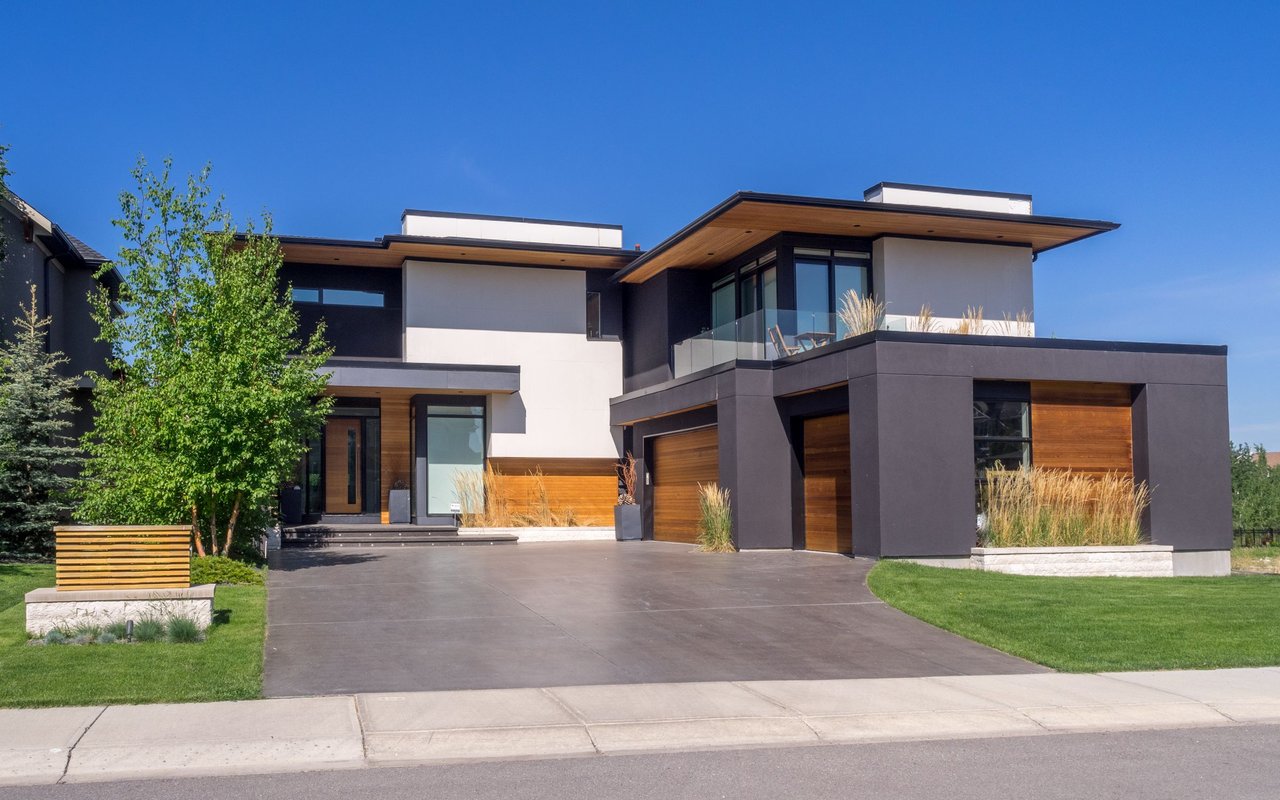
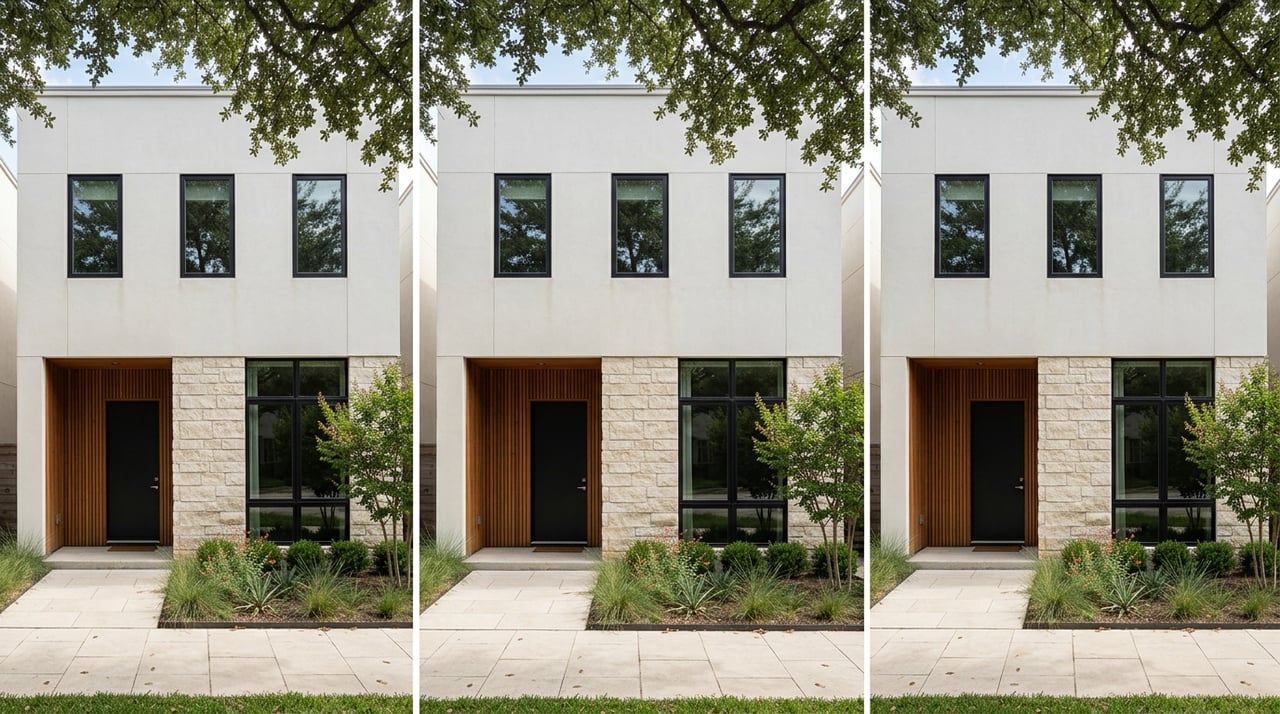
A newly built 1,800 to 2,000-square-foot unit on a subdivided parcel from the same block, warrantied systems, higher energy performance, no near-term capex, smaller yard, no protected trees to preserve. Same price. Different life. What you are buying is completion risk transferred to the builder and a lifestyle that assumes a walkable radius rather than a backyard.
Both are legitimate. The mistake is treating them as one asset class because the list prices match. They resolve differently on inspection, on renovation feasibility, on future exit, and on which lender product fits.
Which Central Austin Streets Are Actually Moving
The HOME data is not distributed evenly. Community Impact reported in May 2026 that more than 600 Phase 1 applications had been approved city-wide, adding more than 1,200 new units, with Phase 2 activity still thinner at roughly 40 small-lot buildings and a handful of subdivisions. On the ground in Central Austin, the concentration shows up along the Cherrywood and North Loop corridors, in pockets of Hyde Park adjacent to the 45th Street commercial spine, in Bouldin Creek south of Oltorf, and in parts of East Austin that sit outside the tighter historic overlays that protect 78703 and pockets of Travis Heights.
Meanwhile 78703 continues to behave like the market it always has. Tarrytown's median hovering near $1.55 to $1.78 million, days on market stretching, and homes above $1.5 million running 80 to 90 days to contract per Team Price's July tier data. Not because demand has cracked, but because the buyer pool for a $2M-plus renovated Pemberton Heights home is a different pool than the one now cross-shopping a new-build small-lot unit in Cherrywood. The HOME rewrite did not change 78703. It added a floor beneath 78704 and 78702 that pulls the metro median downward while the top of the market drifts sideways.
FAQ
Does HOME apply in West Lake Hills or Rollingwood?
No. The rewrites are City of Austin ordinances. Independent municipalities like West Lake Hills operate under their own councils, so a Central Austin buyer priced out of the city cannot assume the same lot-split math works west of Loop 360.
If new supply is expanding, why is the metro median only about 2 percent below year-ago levels?
Because the ceiling is not moving. Higher-price closings still anchor the average, especially early in each month when larger homes tend to close. ABoR's Vaike O'Grady has flagged the year-to-date figure as more reliable than any single-week headline, and the YTD number through July has held between $426,000 and $428,000.
Should I ask the seller for a HOME feasibility letter?
Not from the seller. Ask your buyer's agent to pull the deed restrictions, review the plat, and run the impervious cover and heritage tree math before you waive the option period. A seller's "development potential" claim is marketing until the survey confirms it.
Let's Read Your Short List Together
If you are weighing two Central Austin homes at the same price and one of them sits on a lot that could be split under HOME Phase 2, the offers are not comparable. That is the kind of read Andrea Hamilton brings to a Saturday tour: construction literacy paired with a working file on which blocks are actually moving under the new rules and which are still governed by covenants written in 1954. If you want a second set of eyes on your list before you write, let's connect.